What are LSI keywords? Discover how they can help your SEO!
 Joram BoonSEO and content specialist
17 April 2024 · updated 5 April 2024
How annoying is it when you're talking to customer service and they keep saying the exact same thing? Super annoying! You just want help, advice, MORE CONTEXT!
This is how search engines felt before LSI keywords (Latent Semantic Indexing keywords) came along.
Search engines were craving that context, the 'why' behind the 'what'. LSI keywords provide that context, letting search engines understand not just what the words mean, but also the search intent behind them.
The result? A more authentic, valuable search experience for users.
Curious how LSI keywords can help your online store's SEO? Keep reading!
In short…
- LSI keywords strengthen the context of your content for search engines, which results in better rankings.
- Using LSI keywords means content is better matched to search intent, which leads to a more valuable experience for the user and more relevant traffic for website owners.
- LSI keywords help spread search terms naturally, which reduces the risk of keyword stuffing considerably.
- Working LSI keywords into your content strategy contributes to long-term results and makes your content more future-proof!
- Using these broader search terms usually means you rank for more search terms, reaching a wider audience!
What are LSI keywords?
LSI keywords, also known as Latent Semantic Indexing keywords, are words or short phrases closely related to the main keyword or topic of a page or document. Think of synonyms or words related to that main topic.
With Latent Semantic Indexing, the algorithm looks at the relationships between words to try to get more context around the keywords and the search intent behind them.
The image below shows this nicely…

LSI keywords help search engines understand the context and relevant content of web pages by making connections between different terms and concepts. This isn't just about focusing on specific keywords, but also about the broader context and related topics within the content.
For example, in a blog post about "healthy eating", LSI keywords might be terms such as "nutrients", "calorie intake", "balanced diet", and "dietary advice".
These related terms help search engines identify the content as relevant for users searching for information on how to eat healthily, even if they don't use these specific terms in their search query.
5 reasons to use semantics!
Improved search engine ranking: LSI keywords make your content more relevant to search engines by adding context and variation, which often results in a higher position in search results.
No repeating the same keywords (keyword stuffing): With LSI keywords you avoid repeating the same keywords over and over, also known as keyword stuffing. This makes your content more interesting and more pleasant to read.
Wider audience: Using these smart keywords means a wider audience finds you. People searching with different words that should still lead to your page now find you more easily.
New insights: Using LSI keywords can also help bring new insights into your topic. By using various related terms, you can make unexpected connections or offer new information visitors won't find anywhere else. This makes your content unique and valuable.
Future-proof: Google keeps getting smarter. By working with LSI keywords now, you make sure your website stays easy to find in the future too.

Finding LSI keywords, here's how!
Finding the right LSI (Latent Semantic Indexing) keywords for your website might seem complicated, but with the right tools and a bit of creativity it's easier than you think. Here are a few ways to get started:
Use dedicated SEO tools: There are plenty of online tools that can help you find LSI keywords. A few popular ones are:
LSI keyword generators: These are dedicated tools that give you a list of related keywords when you enter a main keyword. Examples include LSI Graph or the free Keysearch generator. ChatGPT is certainly a candidate too!
Synonym generators: These tools are great for finding variations of your main keywords. Websites such as Thesaurus.com can help you find synonyms that can serve as LSI keywords.

Google is your friend: Google itself offers a wealth of information for finding LSI keywords, completely free.
Searches related to: Scroll to the bottom of the Google search results page and you'll find a section called "Searches related to [your search]". These searches are gold for finding LSI keywords.
People also ask: This box often appears in search results and shows questions other people have asked. These questions are often rich in LSI keywords and give insight into what people really want to know.
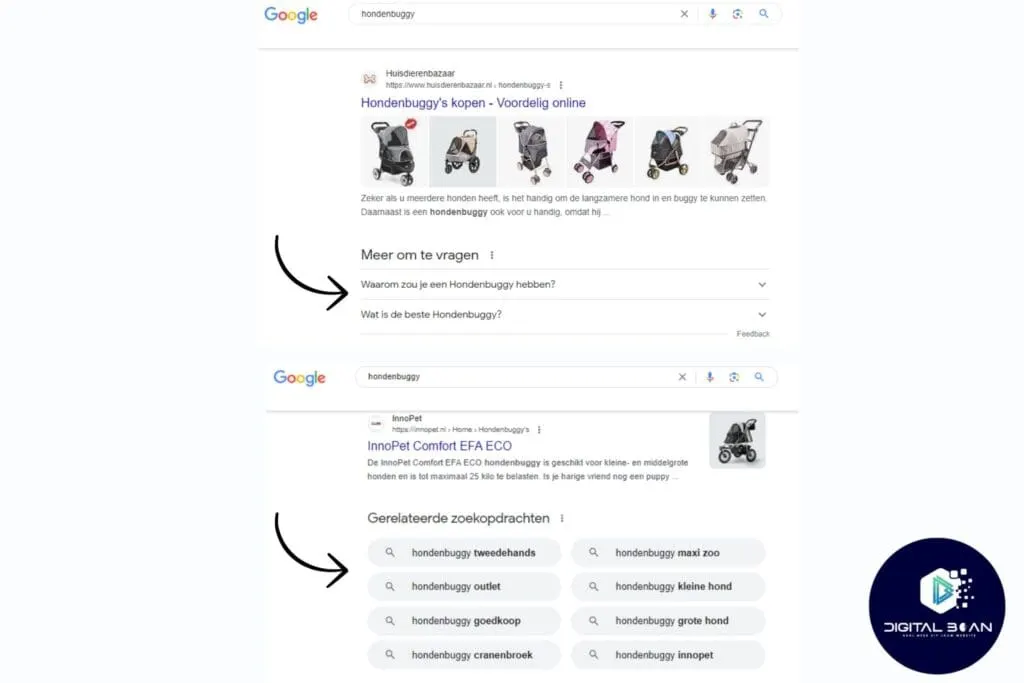
Use your common sense: Sometimes the best tool is your own brain. Think about your topic and ask yourself: which words or phrases would people use if they wanted to know more about this? Try to put yourself in your target audience's shoes and use common sense to come up with relevant terms that enrich your content.
Work LSI keywords in naturally!
Now that you've found and chosen your LSI keywords, you still need to work them into your SEO copy. And do it naturally! No worries, here are a few practical tips for working LSI keywords in naturally, without over-optimising your content:
1. Work them into the content: LSI keywords should be worked in so they fit naturally within the context. That means using them in a way that makes sense for your readers, not just for search engines. Remember to spread them across your content: work them into the introduction, the middle section, and the conclusion.
2. Use synonyms and related terms: An effective way to work in LSI keywords is by using synonyms and related terms that complement the main content of your text. This avoids repeating the same terms and usually makes your text richer and more informative.
3. Use them in subheadings: Subheadings (H2, H3, etc.) are used to strengthen the structure of your content, and search engines look at these for extra context. A great opportunity to work in some LSI keywords!
4. Add them to meta descriptions and titles: Although meta descriptions don't directly contribute to SEO rankings, they do help your click-through rate. Including LSI keywords in meta descriptions and titles can boost the relevance of your content and attract users.
Of course, you shouldn't take all of this too literally! Again, use common sense and check whether you're happy with how it reads yourself. If not, it's probably not good for your SEO rankings or your visitors either!
Often 3 to 5 LSI keywords spread across all the spots mentioned above are enough!

Examples of natural implementation
To give you a small idea of where you can use all this, here are a few examples:
Blog posts
If you're writing a blog post about "the best SEO strategies for 2024", you could include LSI keywords such as "search engine optimisation trends", "the importance of semantic keywords", and "Google algorithm updates".
Working these search terms naturally into the text improves your SEO without relying on excessive repetition of the same keyword.
Product descriptions
When describing a product, such as an "eco-friendly water bottle", you could use LSI keywords such as "sustainable drink bottle", "BPA-free water bottle", and "refillable bottle".
This gives search engines more context, but also provides valuable information for potential buyers.
Meta descriptions
For a page offering digital marketing services, you could write a meta description like:
"Discover how our tailored digital marketing strategies, including advanced SEO, social media advertising, and Google Ads, can transform your brand."
Everything in a nutshell, semantically speaking!
At its core, SEO is about more than just keywords; it's about the relationship between content, context and the user. Here are the key points about LSI keywords and why they matter so much for your SEO strategy:
- LSI keywords improve your SEO ranking: They help search engines understand the context and relevance of your content.
- Avoid over-optimisation: By bringing diversity to your keywords, you avoid the well-known problem of keyword stuffing, which leads to negative results.
- Boost the relevance of your content: LSI keywords contribute to more natural, more relevant use of language, and sometimes they open up bridges to new insights too!
At Digital Bean we combine these insights with our core values:
- Transparency and honesty: We're open about our methods and strategies.
- Focus on results: Our focus is on achieving measurable success.
- Direct communication: Direct communication and quick responses are standard with us.
Want an SEO strategy that really works, built on transparency, direct communication and a focus on results? Then book a call with Digital Bean today!
>> Book your call here! <<
Together we'll grow your online presence with a well-thought-out SEO implementation and, of course, the much-needed LSI keywords.
Speak soon!